
The Design Creativity (DC) group focuses on understanding, supporting and empowering fundamental human capabilities and behavioral traits in the creative design of interactive artifacts and environments.
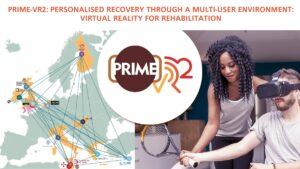
The DC group’s research addresses three main research questions: (1) How to optimally integrate novel technologies in the design process? In particular, (1a) how to alleviate encumbrance in design by integrating XR technologies, like mitigating design fixation with flexible XR interaction and reducing design stereotype with immersive VR; (1b) how to support early stages of design by enhancing the understanding of users and providing better ideation tools; and (1c) investigating the potential side-effects of introducing XR in design, such as Proteus Effect and internalization of stereotypes. In the recent PRIME-VR2 project funded by H2020 the DC group was responsible for the design and digital fabrication of controllers for VR-based rehabilitation. (2) How to mitigate the cultural bias towards creativity methods used in designing interactive products? Various creative methods will be tested with students from different cultural backgrounds during creative design education, and interventions will be developed to stimulate participants’ creativity based on their unique needs. (3) How to provide a more informed, inclusive and comfortable arena for digital fabrication, making and Fab Lab education? The focus of this research includes sensing of location and use of machines and interactions in Fab Lab, to quantify demands, appropriation, patterns and issues in use during the informal and formal activities and education conducted in Fab Lab Oulu and other maker spaces.
People
Georgi V. Georgiev
Professor
Email | Call
Scholar

Sohail Soomro
Postdoctoral researcher
Email | Call
LinkedIn

Marta Cortés Orduña
Doctoral researcher
Email | Call
Scholar

Roshan Fernando
Doctoral Researcher
Email | Call

Ummi Latif
Doctoral researcher
Email | Call
LinkedIn | Scholar

Mengru Wang
Doctoral researcher
Email | Call
Projects
PRIME-VR2 – Personalised recovery through a multi-user environment VR for Rehabilitation (H2020)
Selected Publications
2023
2022
Cascini G, Nagai Y, Georgiev GV, Zelaya J, Becattini N, Boujut JF, Casakin H, Crilly N, Dekoninck E, Gero J, Goel A, Goldschmidt G, Gonçalves M, Grace K, Hay L, Le Masson P, Maher ML, Marjanović D, Motte D, Papalambros P, Sosa R, Štorga M, Tversky B, Yannou B & Wodehouse A (2022) Perspectives on design creativity and innovation research: 10 years later. International Journal of Design Creativity and Innovation, 10(1):1-30. https://doi.org/10.1080/21650349.2022.2021480
2021